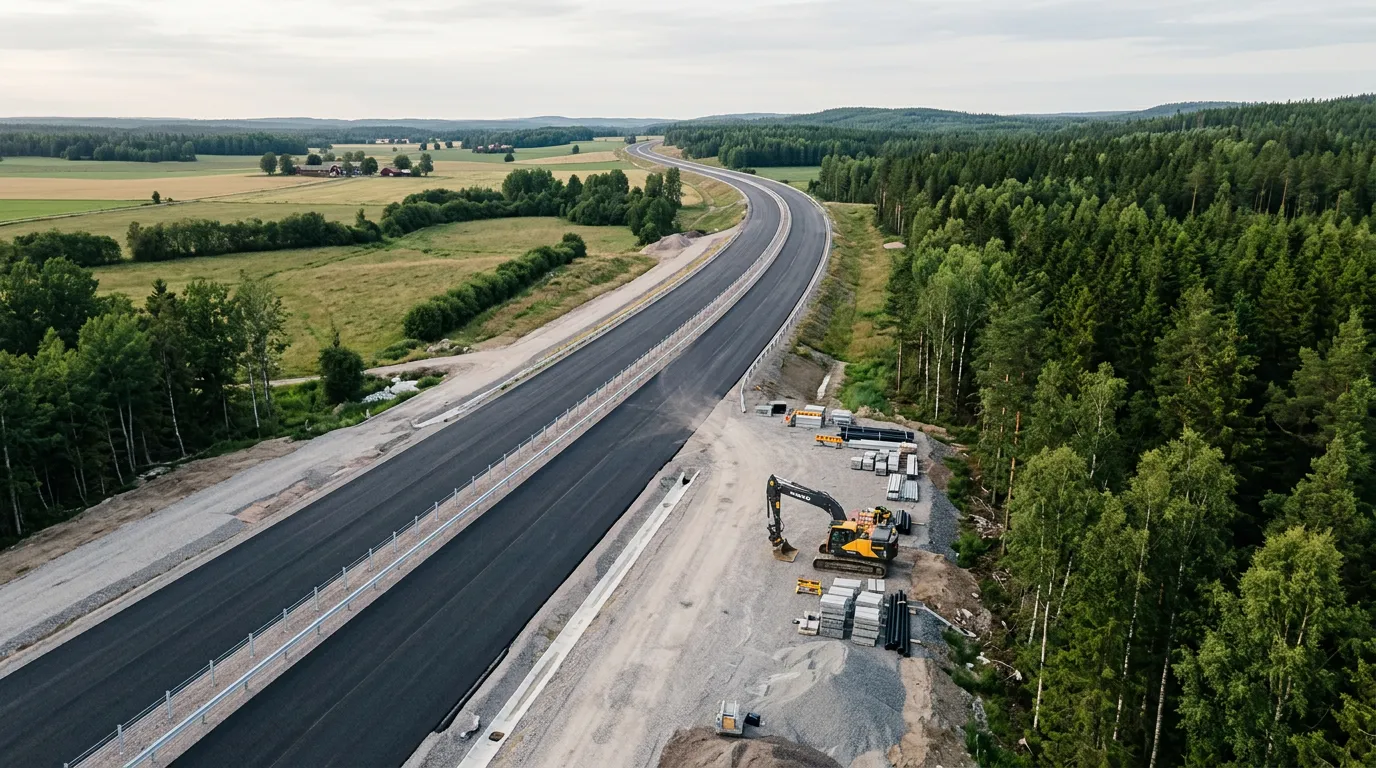
The winner's curse in infrastructure procurement

Even if every cost estimate is honest and unbiased, the projects that get selected will still overrun. Not because anyone lied: because the selection itself favours the underestimates. That is the winner's curse, and it moves the overrun debate from blame to system design.

Dried flowers in a ceramic vase beside oak panelling on a concrete floor

Selected projects overrun even when no one lies

Because the selection is biased even when no single estimate is. When projects are chosen on uncertain cost estimates, the candidates that look cheapest win, and looking cheap is correlated with being underestimated. The chosen portfolio ends up costing more than forecast without anyone having shaded a number.

The term comes from auctions. In the early 1970s, petroleum engineers noticed that the oil companies winning offshore drilling leases went on to earn strangely poor returns on them. Every bidder had valued the tract honestly; the valuations simply scattered around the true value, and the auction handed the lease to whoever sat highest in the scatter. Winning was itself evidence of overestimating.

Infrastructure selection runs the same machine in reverse. Candidate projects compete for places in a national plan on estimated costs and benefits. The estimates are made early, when uncertainty is largest, and the candidates that look cheapest relative to their benefits get in. Jonas Eliasson formalised the consequence in a 2025 paper in Transportation Research Part A, built on 276 Swedish projects:

If projects are selected based on uncertain ex-ante estimates of their true costs, the true costs of the selected projects will turn out to be higher than the ex-ante estimates, on average, even if the ex-ante estimates of all project candidates are unbiased.

Jonas Eliasson, "Cost overruns of infrastructure projects – distributions, causes and remedies", Transportation Research Part A (2025).

The winner's curse needs no villain

The overrun literature has spent twenty years arguing about intent. Bent Flyvbjerg's school holds that early estimates are systematically shaded down, by optimism or by strategy, to get projects approved. Peter Love and colleagues have pushed back in the same journals: no empirical study has demonstrated deliberate underestimation, and scope changes plus genuine early-stage uncertainty explain the record. The argument is real, unresolved, and largely beside the point.

The winner's curse needs no villain. Grant every estimator honesty and competence, and the selected portfolio still comes in underestimated, because ranking uncertain numbers and keeping the winners is a filter that passes underestimates through. That changes what a fix looks like. Reforms aimed at blame, better incentives, harsher accountability, more audits of the estimators, do not touch a selection effect. Changing how and when the selection happens does.

The effect is large enough that treasuries rule against it

Large enough that treasuries write rules against it. HM Treasury's Green Book guidance on optimism bias instructs British appraisers to uplift early capital estimates by fixed percentages, up to 51 percent for non-standard buildings, and works duration by up to 39 percent, unless the underlying risks are demonstrably managed. That is a state telling itself, in published guidance, that the raw numbers entering its own project selection are expected to be wrong in a known direction.

Outcome data point the same way. In Eliasson's Swedish dataset, cost estimates grew 24 percent during early planning and another 27 percent during late planning, on average, while estimates at the decision to build sat close to final costs. McKinsey's productivity researchers have put the headline figure at 98 percent of megaprojects overrunning by more than 30 percent; that number rests on a proprietary project database that has not been peer reviewed, so treat it as directional and lean on the audited datasets instead.

Measure Figure Source
Green Book uplift, capex (non-standard buildings) up to +51% HM Treasury, optimism-bias guidance
Green Book uplift, works duration up to +39% HM Treasury, optimism-bias guidance
Estimate growth during planning, Swedish projects +24% / +27% Eliasson (2025), early / late planning
Growth at build decision and during construction +4% / +3% Eliasson (2025)
Megaprojects overrunning by more than 30% 98% McKinsey (2015), proprietary database

Better information earlier, and the field kept open longer

Two things: better information earlier, and a selection that stays open longer. Eliasson's own remedy is to plan more candidates than the budget can fund and keep them in genuine competition with each other, choosing late, once the estimates have matured. The logic follows directly from the mechanism. The curse operates where uncertainty is large and options are few, so shrink the uncertainty before the choice and keep more options alive up to it.

Norway shows both halves. Since 2000, projects above one billion kroner pass an external quality-assurance review before parliament commits funding, and follow-ups by NTNU's Concept research programme find most reviewed projects finishing within their cost frame. But Welde and Odeck found, in Transport Reviews (2017), that estimates still grew about 40 percent during planning, before the gate. External review verifies the number at the moment of decision. It does not produce better numbers earlier, and it does not widen the field of candidates.

Sweden currently does neither. The projects selected for the national plan score the same calculated societal return as the candidates that were rejected; we have written before about a selection indistinguishable from chance. The binding constraint is mundane: every candidate kept alive costs investigations, design documents and reviewed estimates, produced at human speed, so planners can afford few alternatives and must commit early. Of everything in the overrun debate, that constraint is the one that has started to move. When early-stage engineering gets cheaper per alternative, keeping projects in real competition longer stops being a policy ideal and becomes a line item.

  1. Jonas Eliasson, "Cost overruns of infrastructure projects – distributions, causes and remedies", Transportation Research Part A 198, 2025.
  2. HM Treasury, Green Book supplementary guidance: optimism bias, drawing on Mott MacDonald's 2002 review of large public procurement.
  3. Morten Welde & James Odeck, "Cost escalations in the front-end of projects – empirical evidence from Norwegian road projects", Transport Reviews 37(5), 2017.
  4. Sriram Changali, Azam Mohammad & Mark van Nieuwland, "The construction productivity imperative", McKinsey & Company, June 2015.
Benjamin Glaser Co-founder at Yesper. Writes about AI and the industry that builds the world. benjamin@yesper.ai

Yesper is the AI civil engineer for construction and infrastructure. AFRY, COWI, NRC Group and other Nordic firms use it to halve the time on a study, rerun calculations in minutes, and catch errors that would otherwise slip through. Get in touch if you'd like to see what it can do for you.

Book demo