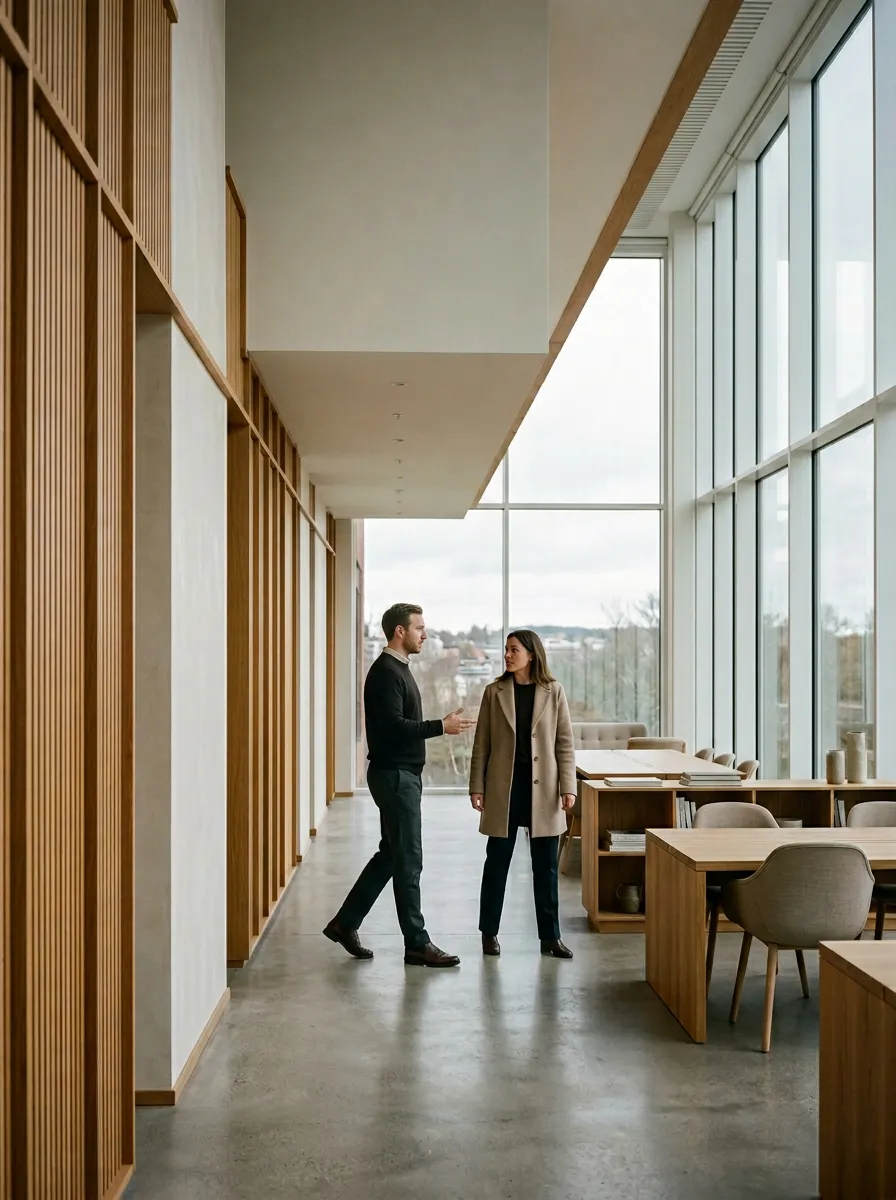
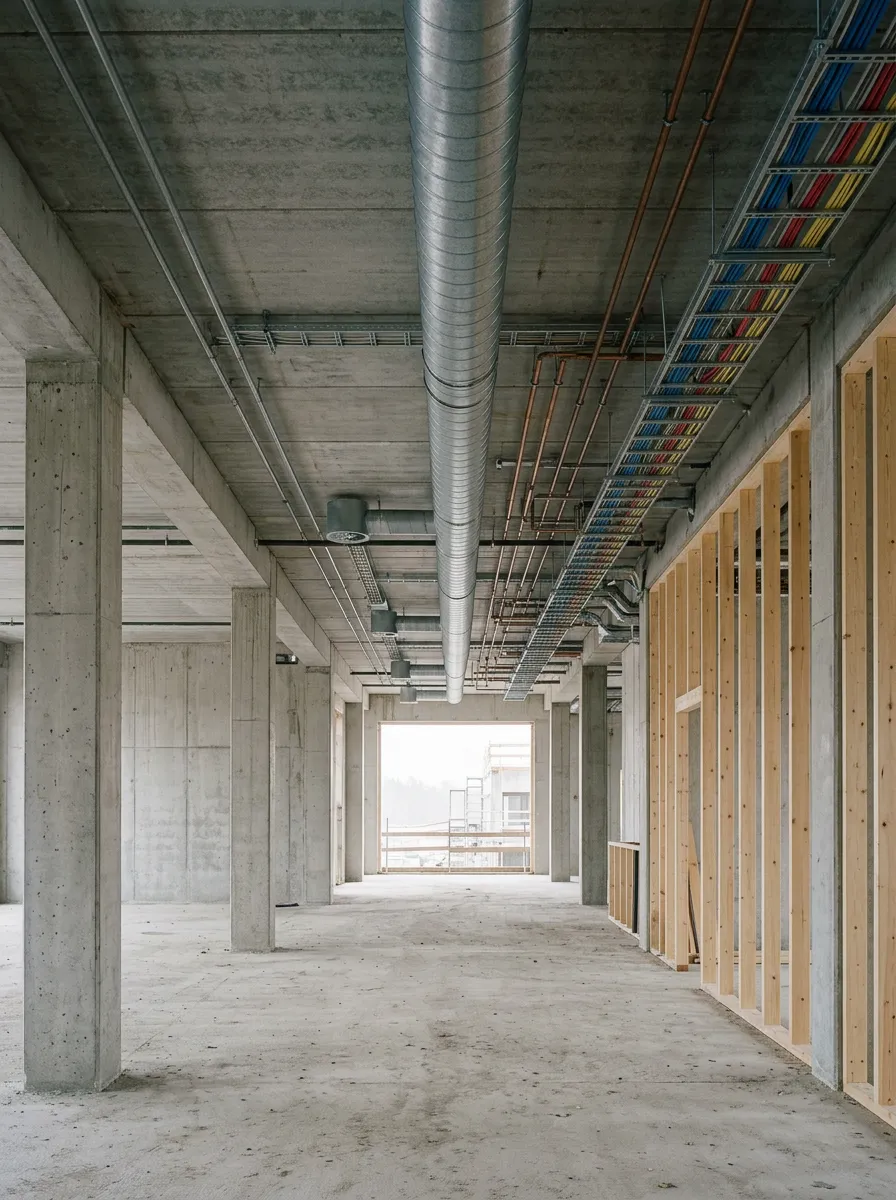
A work preparation from the contract, the drawings and the weather forecast

A work preparation exists to catch what is specific to one activity on one site: the depth of this trench, the wind over this lift, the temperature curve across this pour. Yesper assembles it from the activity's own documents and from the conditions of the week the work will actually be done in, so your team spends its time on the assessment rather than on the compilation.

The template misses what it exists to catch

In February 2018, a sewer trench in Hedemora stood about four metres deep with straight-cut walls. Shoring equipment was on site, and the arbetsmiljöplan, the statutory work environment plan, required protection wherever sloping was not possible. The walls came down and a worker died under the soil. The district court acquitted; in March 2022 the Svea court of appeal convicted the CEO and set a corporate fine of SEK 1 million, ruling that merely signing the plan was not enough. The paper was all in order. The trench was cut straight anyway.

It does not take four metres. A collapse at one or two puts two to three tonnes of soil on top of a person, enough to suffocate them; Schakta säkert, the industry's excavation handbook, has carried that figure since 2015. In 2023, the industry's worst year in a decade, 18 people died in Swedish construction; an average year sees about ten.

Under AFS 2023:13, the slope of an excavation must be adapted to the conditions on the site and assessed by someone with geotechnical competence; a fixed angle to copy appears nowhere in the text. Since January 2025, AFS 2023:3 also requires Bas-U, the safety coordinator for the execution phase, to keep the plan updated against the working methods actually in use, and starting without a written plan risks a sanction fee of up to SEK 50,000. The regulation never asked for a template. It asks for the site. Site management mostly knows this and mostly lacks the hour: an interview study at one of the major contractors' sites found preparations written for the riskiest activities, deprioritised when the schedule tightens, and almost never updated once the work changes. The industry's own guidance says the same thing from the other direction: generic descriptions must always be adapted to the specific project.

The documents in, the activity's preparation out

Yesper builds the preparation for one specific work activity from the contract documents, the drawings, earlier projects and observations, with the company's and the project's context carried in from the organisational memory:

  • Fetches the conditions from the documents: the excavation depth and slope from the drawing, the dewatering or sheet-piling requirement from the specification, the distance to existing utilities.
  • Pulls in the weather and the ground: the SMHI forecast and warnings for the period and the location, and where the activity needs it, geology and groundwater from SGU, whose network measures levels at some 550 stations across the country, or map data from Trafikverket and Naturvårdsverket. Yesper flags weather that changes the engineering: a pour scheduled into daily mean temperatures below +5 °C, where concrete that freezes before reaching 5 MPa risks permanently low strength, or gusts at the boom tip beyond the roughly 9 m/s the crane's lift chart assumes.
  • Identifies risks and protective measures for the activity: collapse and landslide risk in a deep excavation, vibration limits where rock is excavated next to an existing building, or work beside live traffic requiring a traffic-control plan and an appointed safety coordinator.
  • Generates inspection checklists tied to the activity and to the requirements that apply to it in the specification, on the drawings and in AMA, and can pre-fill risk registers and related forms.
  • Catches change orders as they arise by comparing the planned execution against the contract and marking work that falls outside it.

The preparation and its checklists export in your visual profile and can be shared straight to Teams or SharePoint. Everything traces back to the document it was built from, and the final judgment sits with site management. The public data sources are already connected; how we taught the system to read Swedish geodata is documented separately.

Where it does the most good

  • Ahead of risky or weather-sensitive work activities.
  • In production planning, when the preparations for coming activities are drawn up.
  • When the weather window governs the work, as with pours, paving and lifts.
  • When contract requirements or drawing revisions change the conditions and the preparation has to follow.
  • When change-order work needs to be caught and documented as it arises.

A deep utility trench in a dense urban setting

Take a deep water-and-sewer trench in a dense urban block. Yesper reads the excavation depth and slope from the drawing, the dewatering requirement from the specification and the distance to the utilities already in the ground, then lays the week's forecast over them: SMHI shows sustained rain, and the preparation flags raised collapse risk and a heavier dewatering load for the period. SGU's groundwater network and the well archive that drillers have reported into since 1976 point to high levels in the area, and that goes into the preparation. High groundwater is a legal condition as much as a technical one: diverting it away from an excavation is vattenverksamhet under chapter 11 of the environmental code and can require a permit from the land and environment court. The inspection checklists for excavation and backfill come out tied to the activity, and when the pipe alignment is later revised, Yesper marks the change against the contract as a possible change order.

This activity, this week

Yesper builds the preparation from this activity's documents and this week's forecast, in minutes. Site management gets the hour back, and can spend it at the edge of the excavation, judging whether this slope holds in this soil.

  1. Arbetet, on the Svea court of appeal ruling in the Hedemora trench collapse (case B 822-20), April 2022.
  2. SGI & Svensk Byggtjänst, Schakta säkert – säkerhet vid schaktning i jord, 2015.
  3. Arbetsmiljöverket, AFS 2023:3 and guidance on excavation work (AFS 2023:13, ch. 5).
  4. Byggföretagen, Arbetsskador i byggverksamhet 2024.
  5. Heidelberg Materials, Betonggjutning i kall väderlek and on winter pours.
  6. SGU, the groundwater network and the well archive.
  7. On preparation practice: SBUF, report 12456 on work preparation, and a KTH interview study at a major contractor's sites (2018).
Benjamin Glaser Co-founder at Yesper. Writes about AI and the industry that builds the world. benjamin@yesper.ai

Yesper assembles the work package from the task's documents and the week's real conditions, so site management judges rather than compiles. Get in touch if you'd like to see how it works.

Book demo