Eskers, groundwater and PFAS: why a railway takes two years to design

Because the ground gets a vote. Before anyone can draw a railway, the earth beneath it has to be measured through a full year of seasons, and thirteen engineering disciplines have to agree on what the measurements mean. Here is what those two years actually contain.

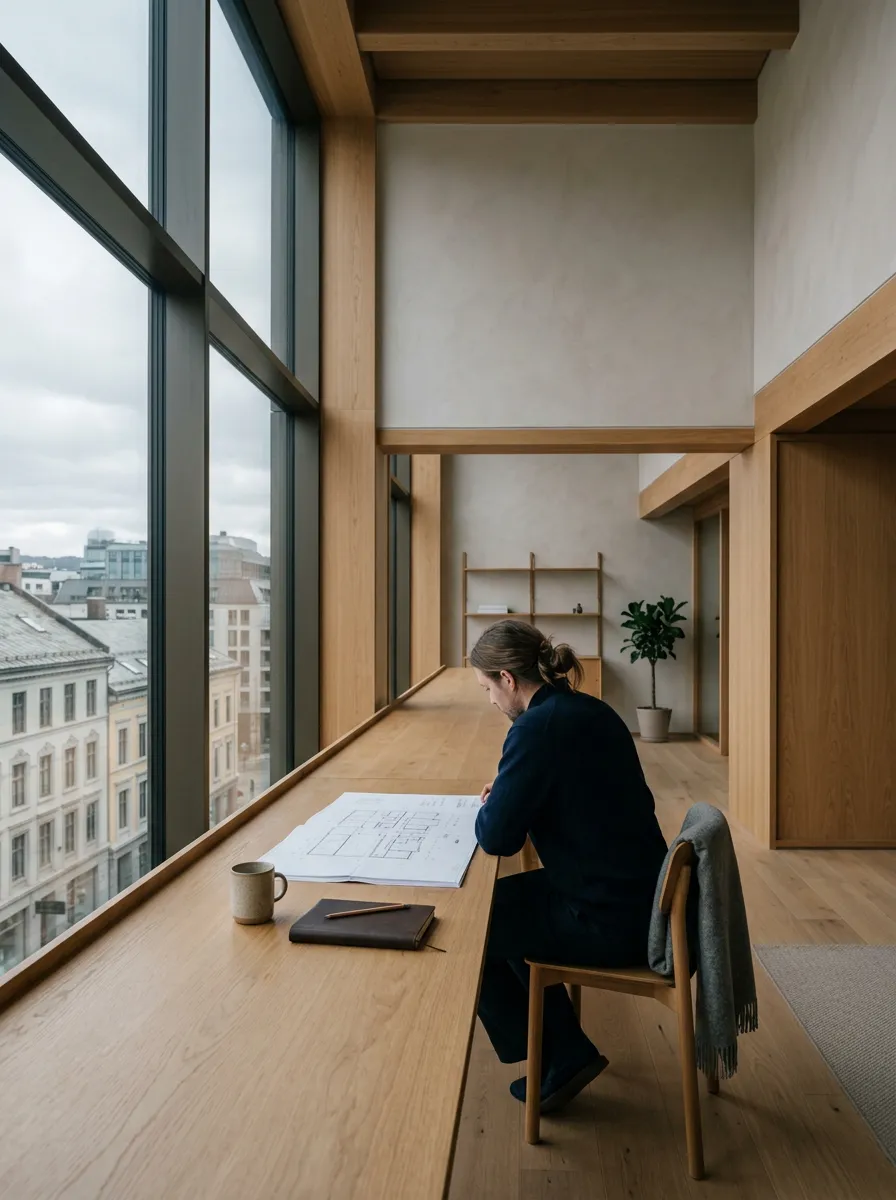
A person walks past a tall window overlooking bare trees under an overcast sky

Thirty kilometres, thirteen disciplines, not one metre of track

Consider a recent assignment: a 30 km section of new railway in northern Sweden. Thirty kilometres is about fifteen minutes on the train that will one day run there. For nearly two years, a design organisation worked on it. Geotechnical engineers, hydrogeologists, rock engineers, bridge designers, road designers, drainage and landscape specialists, environmental scientists, surveyors, even land negotiators — thirteen disciplines in all. When they finished, nothing had been built. Not a sleeper, not a culvert.

What they handed over was four tender packages: drawings, technical specifications, bills of quantities, coordinated 3D models. Tens of thousands of pages that tell the contractors exactly what to build, where, in what order and to what tolerance. Two years to produce documents sounds absurd, until you look at what the documents have to know.

What the ground demands

Start with water. A railway through this landscape runs partly in cuttings, below the natural ground surface, so the designers need to know how high the groundwater can rise. Not on the day someone happens to measure it: at its highest, in the wettest year the structure is meant to survive. So hydrogeologists set standpipes into the ground along the corridor and read them again and again, through the spring flood, the summer low, the autumn rains, the winter freeze. A standpipe is nothing glamorous, a slotted tube in a borehole with a logger hanging inside it. The glamour is in the curve that emerges after a year of readings. A seasonal measurement series takes the seasons it takes. No budget, no deadline and no software makes the spring melt arrive early.

Then the landforms. The corridor crosses glacial eskers, long ridges of sand and gravel left by rivers that ran beneath the ice sheet ten thousand years ago. They are handsome to look at and awkward to build through, because an esker is also a natural aquifer; some of them supply whole communities with drinking water. People have always built along them: the old country roads follow the ridges, and the gravel pits have eaten into them for a century. Cut through one carelessly and you can drain it. So the alignment threads its way past them, and every adjusted alignment sends the other twelve disciplines back to their calculations.

Then what the ground is hiding. One stretch of the corridor sits on sulphide soil, a dark, silty sediment left by an old seabed. Undisturbed, it is harmless. Excavate it and let it meet air, and it oxidises into acid that leaches metals into the nearest stream. Every cubic metre has to be mapped, classified and given a destination before anyone digs. And in the groundwater itself: PFAS, the fluorinated compounds that never break down. When construction pumps water out of an excavation, that water moves, and the design has to know in advance where the contamination goes. None of this is an exotic find along this coast; it is a known condition. But known does not mean quick: the mapping takes its boreholes and its laboratory weeks.

Thirteen disciplines, one model

None of this work stands alone. The drainage design rests on the groundwater series. The bridge foundations rest on the geotechnics. The alignment answers to the eskers, the environmental controls answer to the alignment, and the bills of quantities answer to all of it. The disciplines coordinate their work in shared BIM models, where a culvert drawn by one team can collide with cable ducting drawn by another, and the collision has to be found on screen rather than in the ground. Change a single measured water level and a culvert may need lowering, a cutting widening, a bill of quantities recalculating.

Around the models runs the process. The client reviews the material in several rounds, every round produces comments, and every comment can ripple through the whole chain. Permits for water operations, cultural heritage and protected species run in parallel, the statutory railway plan works its way toward legal force alongside them, and all of it steers the design while it is being drawn. The four tender packages left in careful order: the bridges first, because bridges take longest to build and have to be procured early, then the two large civil works packages. Two years, and at every delivery thirteen disciplines had to agree with one another, on paper, down to the last quantity.

Respect the seasons, question the churn

It is tempting to read two years and see bureaucracy. Mostly, that is wrong. The measurement series cannot be compressed, because the seasons cannot. The judgement in how to pass an aquifer, what to do with a soil that turns to acid when it meets air, how to keep contaminated water where it is — that is engineering of a high order, and it deserves every hour it gets. That someone sat and thought hard about this particular ground's peculiarities is exactly what the money is for.

What deserves less patience is everything wrapped around it: assembling the documents, keeping thirteen sets of them consistent, chasing cross-references, rewriting after each review round, redoing a whole chain of calculations by hand because one input moved. That layer is not engineering. It is routine work at human pace, and it is where the years and the money quietly pile up. It is also, at last, the part machines can carry. The ground keeps its veto, and the seasons keep their schedule. The paperwork around them no longer has to take years.

Benjamin Glaser Co-founder at Yesper. Writes about AI and the industry that builds the world. benjamin@yesper.ai

Yesper is the AI civil engineer for construction and infrastructure. AFRY, COWI, NRC Group and other Nordic firms use it to halve the time on a study, rerun calculations in minutes, and catch errors that would otherwise slip through. Get in touch if you'd like to see what it can do for you.

Book demo