What Harvey is to law, Yesper is to infrastructure

Harvey reads and drafts the documents of law; the lawyer keeps the judgment and the signature. Abridge writes the clinical note; the doctor signs it. Cursor writes the code; the engineer reviews and ships it. Construction, the largest industry in the world, still does its document work by hand.

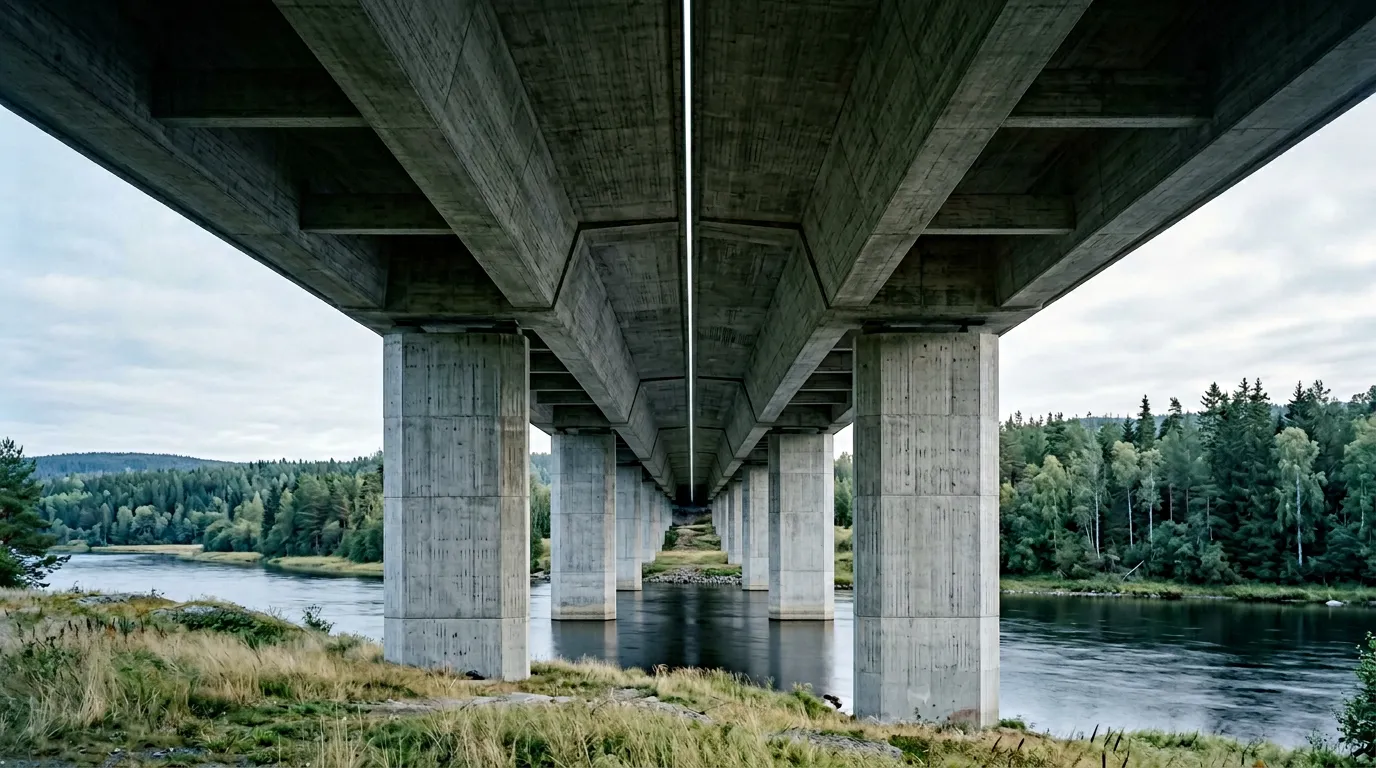
Concrete bridge over a Nordic river, seen from below

Harvey, Abridge and Cursor automated the document layer, not the profession

Each took a regulated, document-heavy profession and automated the document layer, not the profession. Harvey drafts, reviews and analyses legal documents for law firms and in-house teams. Abridge turns the clinical conversation into a finished note in the medical record. Cursor reads a codebase and writes the changes a software engineer describes. Three different industries, one identical division of labour: the machine does the reading, the drafting and the cross-checking, while the professional keeps the judgment, the client relationship and the signature.

None of them built a chatbot that answers questions about the work. They built systems that do the work, at the unit the profession actually delivers: the contract review, the clinical note, the code change.

Profession Product The machine does The professional keeps
Law Harvey Reads, drafts and reviews legal documents Counsel, negotiation, the signature
Clinical medicine Abridge Turns the consultation into the clinical note Diagnosis, treatment, sign-off
Software Cursor Writes and edits code across a codebase Architecture, review, the release

The pattern repeats because the professions share a shape

Because the professions share a shape. The work product is a document. The document answers to a written rulebook: case law and precedent, care standards and diagnosis codes, language specifications and test suites. And the output carries personal, professional accountability. That shape is precisely where generic AI tools stall: a general-purpose model has no grounding in the governing rulebook, no verification loop against the domain's own sources, and no place in the accountability chain. It produces plausible text where the profession needs defensible text.

The vertical products got three concrete things right. They deliver whole work products rather than fragments. They verify output against the sources the profession itself is judged by. And they keep the professional as the deciding instance, which is why regulated buyers can adopt them at all.

Investors have priced the pattern accordingly. Venture firm NEA's case for vertical AI sets the roughly 11 trillion dollars the US spends on labour each year against an enterprise software market of about 450 billion: software that does work is playing for a market more than twenty times the size of software that supports work.

The next titans of software will be vertical AI companies in specialized industries.

Tiffany Luck & James Kaplan, Tomorrow's Titans: Vertical AI Explained, NEA, January 2025.

Construction, the largest industry, is still missing its version

The largest one. Global construction put 9.7 trillion dollars of work in place in 2022, and Oxford Economics projects 13.9 trillion by 2037. Finance got its defining machine four decades ago; there is a terminal on every trading desk. Construction never got one, and it has no Harvey either. The biggest industry on earth still moves its money on documents that are written, read and checked by hand.

That is not for lack of fit. Infrastructure engineering has the exact shape the pattern selects for. A road or a railway exists, for years before construction starts, as written deliverables: investigations, technical descriptions, specifications, tender documents, review comments. Every one of them answers to a written rulebook of national standards and agency requirements. And every one of them carries a responsible engineer's name, the same way a legal opinion carries the lawyer's and a clinical note the doctor's.

The brief for the construction version follows from the three that exist. It has to read and produce whole written deliverables, not suggest sentences in a text editor. It has to verify its output against the governing requirements, in the edition the project actually declares. It acts on drawings and models without pretending to replace the designer at the drawing board. And it leaves the judgment and the signature with the engineer, because regulated infrastructure requires exactly that, in every country it is built in.
Where Yesper fits

Yesper is the AI civil engineer for construction and infrastructure. It reads and produces the written deliverables of road and rail projects, checks them against the requirements that govern them, and leaves the judgment and the signature where they belong: with the engineer.

A comparison with Harvey, Abridge and Cursor is a claim about the pattern, not about parity; every vertical has to earn its own outcomes. But the shape of the answer is no longer a guess. In law, clinical medicine and software, the document layer moved to machines and the professions kept their craft. Construction's turn is next, and the stakes are larger: nowhere else does this much of the world's money wait on documents moving at hand speed.

  1. Tiffany Luck & James Kaplan, Tomorrow's Titans: Vertical AI Explained, NEA, January 2025.
  2. Oxford Economics, Global Construction Futures, March 2023.
Benjamin Glaser Co-founder at Yesper. Writes about AI and the industry that builds the world. benjamin@yesper.ai

Yesper is the AI civil engineer for construction and infrastructure. AFRY, COWI, NRC Group and other Nordic firms use it to halve the time on a study, rerun calculations in minutes, and catch errors that would otherwise slip through. Get in touch if you'd like to see what it can do for you.

Book demo