The telephone game with a €100M budget
An instruction leaves the design office looking finished. Three handoffs later, someone on site is guessing what it meant. Every retelling adds cost, and nobody upstream ever sees the bill.
An instruction leaves the design office looking finished. Three handoffs later, someone on site is guessing what it meant. Every retelling adds cost, and nobody upstream ever sees the bill.

The mechanism
It gets retold. A client commissions a design from one or several consultancies. A main contractor reads the result through the lens of a bid: what does this cost, in what order do we build it? Each subcontractor then reads only their own slice, in the context of their crew, their equipment and their margin. Same words, new reader, different question. Children call this the telephone game. Construction calls it a supply chain.
The research on what this does to information is old and unambiguous. Rutger Vrijhoef and Lauri Koskela, studying construction supply chains in 2000, found that the industry's waste has a signature: it shows up far from where it is caused.
Most [waste and problems] are caused in another stage of the construction supply chain than when detected.
A tolerance that contradicts itself between drawing and text costs the designer nothing: it reads fine at the desk where it was written. It starts costing money at the next desk. The estimator prices the uncertainty, or misses it. The subcontractor plans around a guess. If the guess is wrong, the question travels back up the chain as a formal request for information, a change order or rework, weeks later and several tiers removed from the person who could have answered it in a minute. The Navigant Construction Forum measured this traffic across 1,362 projects: on average 796 requests for information per project, at 1,080 dollars each to process, in 2013 money. That is the toll a project pays to clarify its own documents.
Who pays
Because the contracts point one way. Under the Swedish standard contract AB 04, the contractor is not only entitled but obliged to carry out the change and addition work the client prescribes. The subcontractor two tiers down has even less standing: their scope arrives already interpreted twice, priced and scheduled by others. We send broken instructions down a chain that can't refuse them.
The UK's Get It Right Initiative, an industry group that studies error in construction, put its finger on where the money lands:
The majority of the initial cost of error is incurred by Tier 2 Contractors and this cost is often invisible both to Tier 1 Contractors and to end Clients.
Invisible is the operative word. The designer rarely visits site after handover, so the defect never travels back: the same ambiguous detail ships again on the next project. The tier that pays cannot fix the source, and the tier that could fix the source never learns there is something to fix. In the telephone game, at least everyone gets to laugh at the final message. Here the final message is cast into reinforced concrete, and the laugh is an invoice.
The scale
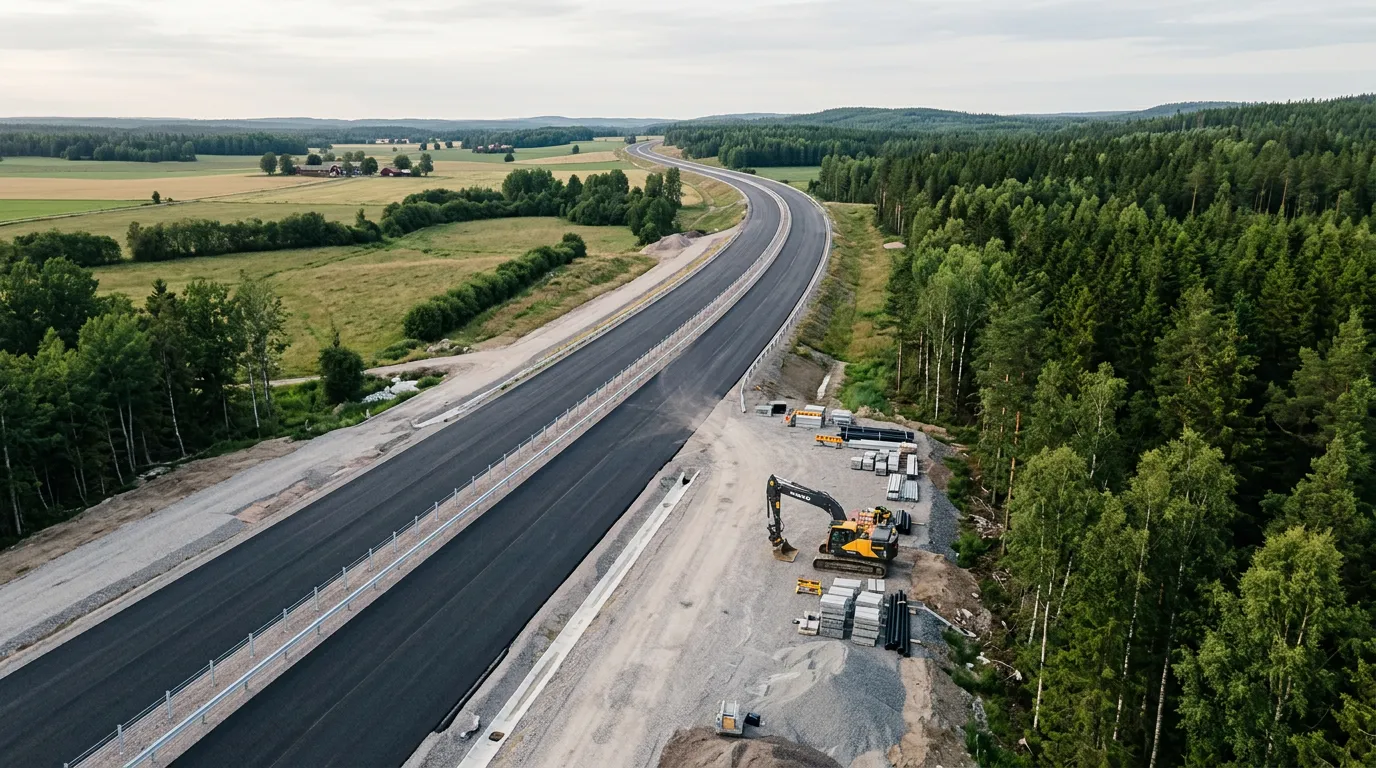
Longer than the word handoff suggests. HS2, Britain's high-speed rail programme, reports over 3,700 UK businesses in its supply chain. That is 3,700 organisations reading documents some other organisation wrote, most of them several retellings away from the original design intent. A €100M infrastructure project routinely involves dozens of subcontractors; a national programme, thousands.
Follow one ambiguous clause down the chain and the cost curve always has the same shape:
| Handoff | Who reads it | What the ambiguity becomes |
|---|---|---|
| Design office | The engineer who wrote it | Nothing yet. It reads clearly to its author |
| Tender | The main contractor's estimator | A risk priced into the bid, or missed |
| Award | A subcontractor, reading only their slice | An assumption about what was meant |
| Execution | The crew at the workface | A formal question, a change order, or rework |
| Afterwards | Lawyers | A dispute file |
Software went through this and built a way out. Code written by many hands, changing daily, full of cross-references: the answer was version control, diffs, merge conflicts flagged automatically, tests run before every release. Construction ships document packages with the same interdependence through email and PDF, unversioned, checked by whoever has time. It is version control without Git, and the merge conflicts surface on site.
The turn
At the source, or nowhere. Every tier after the first can only manage the ambiguity it inherits; only the originating desk can remove it. The economics lean the right way: the same inconsistency that costs hundreds of hours three tiers down costs minutes to fix in the design office, if it is found before the package ships.
Finding it is what has changed. Checking a specification against its own drawings, its cited standards and itself used to be a review task measured in weeks, done by the same overloaded people who wrote the documents. It can now be done by machine, before release, on every revision. Yesper is the AI civil engineer for construction and infrastructure, and this is exactly the work it is built for: reading the whole package the way the chain never can. The telephone game does not need a better whisper. It needs the message checked before it is sent.
Sources
Get news and articles in your inbox.
Yesper reads the whole technical description and flags the unclear and contradictory requirements before they get reinterpreted across three tiers. A small design error caught early never becomes a large bill on site. Book a demo and we'll show you how.
Book demo