The lightbulb and the paperwork

Changing one lightbulb along a rail line takes minutes. The paperwork around it takes longer: a stack of documents before, a stack after. This is what happens when a process built for megaproject risk is applied to every task, however small.

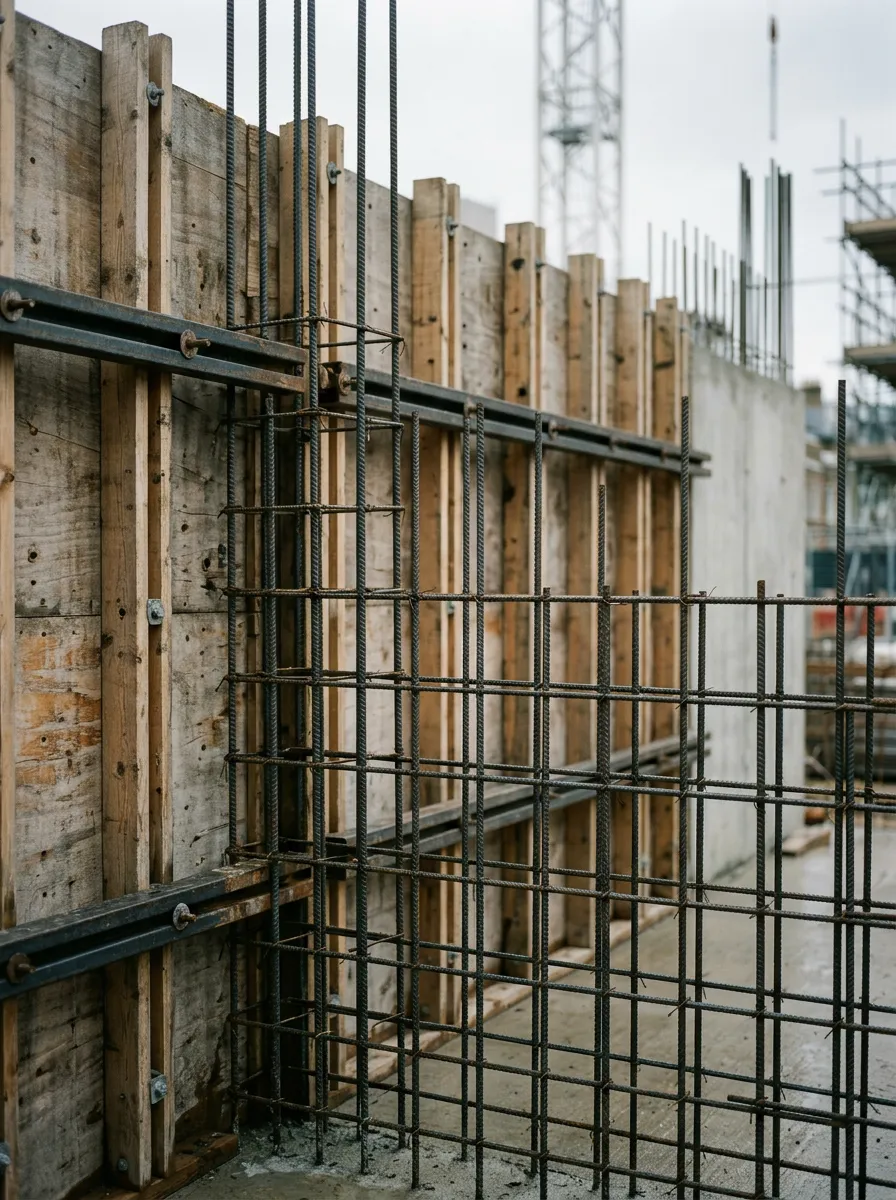
Reinforcement bars and timber formwork on a construction site

Minutes of work, a stack of paper

A rail-maintenance contractor described a routine task to us: replacing a single lightbulb along the line. The bulb takes minutes to change. The paperwork does not. Before anyone touches the lamp there is a work order, a booking for access to the track, a risk assessment, safety planning. Afterwards comes the reporting: confirmation that the work was done, how, by whom, and that the site was left safe. A stack of documents before, a stack after, wrapped around a few minutes of actual work.

None of this is unreasonable on its own. Rail is a safety-critical, public environment, and every sheet in the stack exists because something, somewhere, once went wrong. The imbalance only becomes visible when you put the stack next to the job: the documentation outweighs the work it documents, many times over. And in maintenance, almost every job is this job. The contractor was not complaining about safety. He was pointing at proportion.

A process built for tunnels, applied to every lamp

Because the process was never designed for the lightbulb. The documentation regimes of infrastructure were built where the stakes are highest: new lines, major works, hundreds of people and machines in a live rail environment. At that scale, the shell of plans, permits and reports around the physical work is a rounding error on the budget, and it earns its keep. A tunnel through a city should carry a heavy document load; the consequences of getting it wrong are measured in lives and billions.

But process scales down badly. The documentary cost of a task is largely fixed: the same document types, the same approvals, whether the intervention is a tunnel or a lamp. For the tunnel, the shell is a fraction of a percent of the job. For the lamp, it is most of the job. And maintenance consists almost entirely of lamps: thousands of small, recurring, well-understood tasks, each carrying a compliance shell sized for something far larger. The difference is that the tunnel is built once. The lamps are changed every week, year after year, along the whole line.

No one owns this outcome. The client is right to demand safety documentation. The regulations exist for good reasons. The contractor is right to follow them. Every individual requirement is defensible; it is the sum that is not. Everyone in the industry recognizes the problem. It just has no owner. So the stack grows, one well-motivated requirement at a time.
Repairs that were never in the contract

The shell does not only slow the work down. It also decides what gets paid for. A second picture from the same research: maintenance contracts specify which faults are the contractor's to fix. Inspection remarks arrive continuously, in their hundreds. The contract runs to hundreds of pages; the remarks arrive in other formats, from other systems, written by other people. Checking every remark against the contract text, by hand, does not fit inside anyone's working week. So the crews fix what is in front of them:

Vi har lagat fel som aldrig fanns i vårt kontrakt. Gratis reparationer — det vet jag säkert.

A rail-maintenance contractor. "We have repaired faults that were never in our contract. Free repairs — that I know for certain."

That is not carelessness. It is time arithmetic: reading and cross-reading documents at human speed does not fit in the hours available, so the matching simply does not happen. A third picture completes the pattern: safety plans, the documents with the most riding on them, are written by production managers, exactly the people with the least time to write anything. So the plans turn generic, and everyone knows it, including the client. The cause is the same each time. The documentation load lands on people whose days were already full of the actual work.

When the documentation writes itself

None of these three problems is a knowledge problem. The contractor knows how to change the lamp. The production manager knows the risks on that particular site better than any template does. What is missing is time: time to produce documents, and time to cross-read them. That is exactly the part of the work that no longer has to be done by hand. A work order that arrives with its safety documentation drafted for that specific task and that specific site, ready for the responsible person to check, correct and sign. Inspection remarks matched against the contract as they come in, so that a free repair becomes a decision instead of an accident. The scrutiny stays; a person still reads and signs. What disappears is the blank page.

The lightbulb will always take minutes. The open question is when the paperwork will too.

Benjamin Glaser Co-founder at Yesper. Writes about AI and the industry that builds the world. benjamin@yesper.ai

Yesper is the AI civil engineer for construction and infrastructure. AFRY, COWI, NRC Group and other Nordic firms use it to halve the time on a study, rerun calculations in minutes, and catch errors that would otherwise slip through. Get in touch if you'd like to see what it can do for you.

Book demo