Stuttgart 21 was approved before the iPhone existed
The framework agreement for a new Stuttgart main station was signed in November 1995. The first iPhone went on sale in June 2007. The station is still not open. A tour of Europe's slowest projects.
The framework agreement for a new Stuttgart main station was signed in November 1995. The first iPhone went on sale in June 2007. The station is still not open. A tour of Europe's slowest projects.
Germany
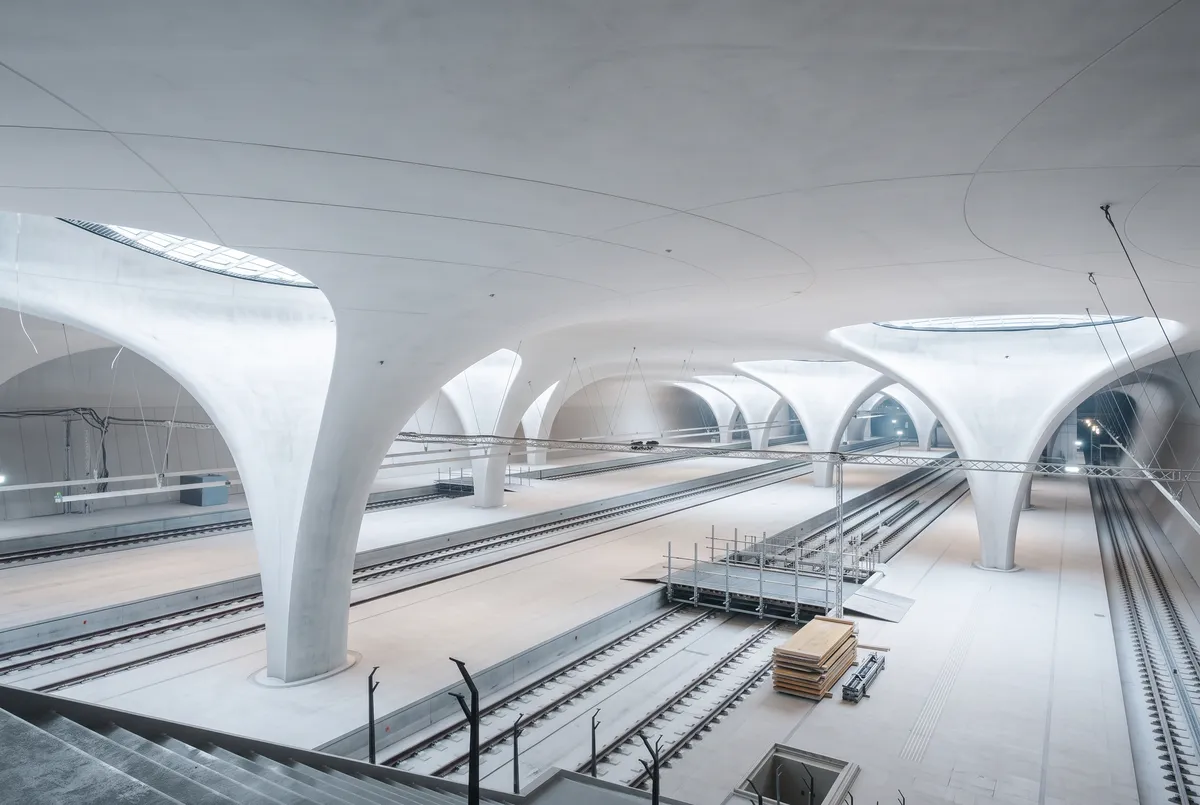
Stuttgart 21 was presented to the public in April 1994. The framework agreement between the federal government, Baden-Württemberg, the city and Deutsche Bahn followed in November 1995, and by April 2006 the planning approval for the central station section had survived the courts. Every one of those milestones passed before the first iPhone was sold, in June 2007. Construction began in February 2010, with opening planned for 2019.
The costs have kept pace with the calendar. The 2009 financing agreement capped the project at 4.5 billion euros; in December 2023, Deutsche Bahn's supervisory board raised the financing framework to 11.45 billion. In November 2025, the company's new chief executive, Evelyn Palla, informed the board that the December 2026 opening could not be met either. As this is written, Germany's largest rail project has no confirmed opening date. A person born when the framework agreement was signed has turned thirty.
Britain
HS2 Ltd was founded in January 2009; the notice to proceed for the main civil engineering contracts came in 2020. In March 2025, chief executive Mark Wild wrote to the transport secretary that the programme was around one third complete where the baseline said it should be three quarters, and that design gaps remained: at one of the main works joint ventures, only 55 percent of design drawings had been issued for construction as of December 2024. His diagnosis of the first root cause fit in one sentence:
Construction commenced too soon, without the conditions to enable productive delivery, such as stable and consented designs.
The bill followed the drawings. The 2020 baseline set a maximum of £44.6 billion, £42.9 billion excluding Euston station; by June 2024, HS2 Ltd's own estimate had reached £61.8 billion excluding Euston, in 2019 prices, and Wild judged any opening before or during 2033 to be challenging. Transport secretary Heidi Alexander summarised the record in June 2025: "Billions of pounds of taxpayers' money has been wasted by constant scope changes, ineffective contracts and bad management." Her verdict: "It's an appalling mess."
Sweden
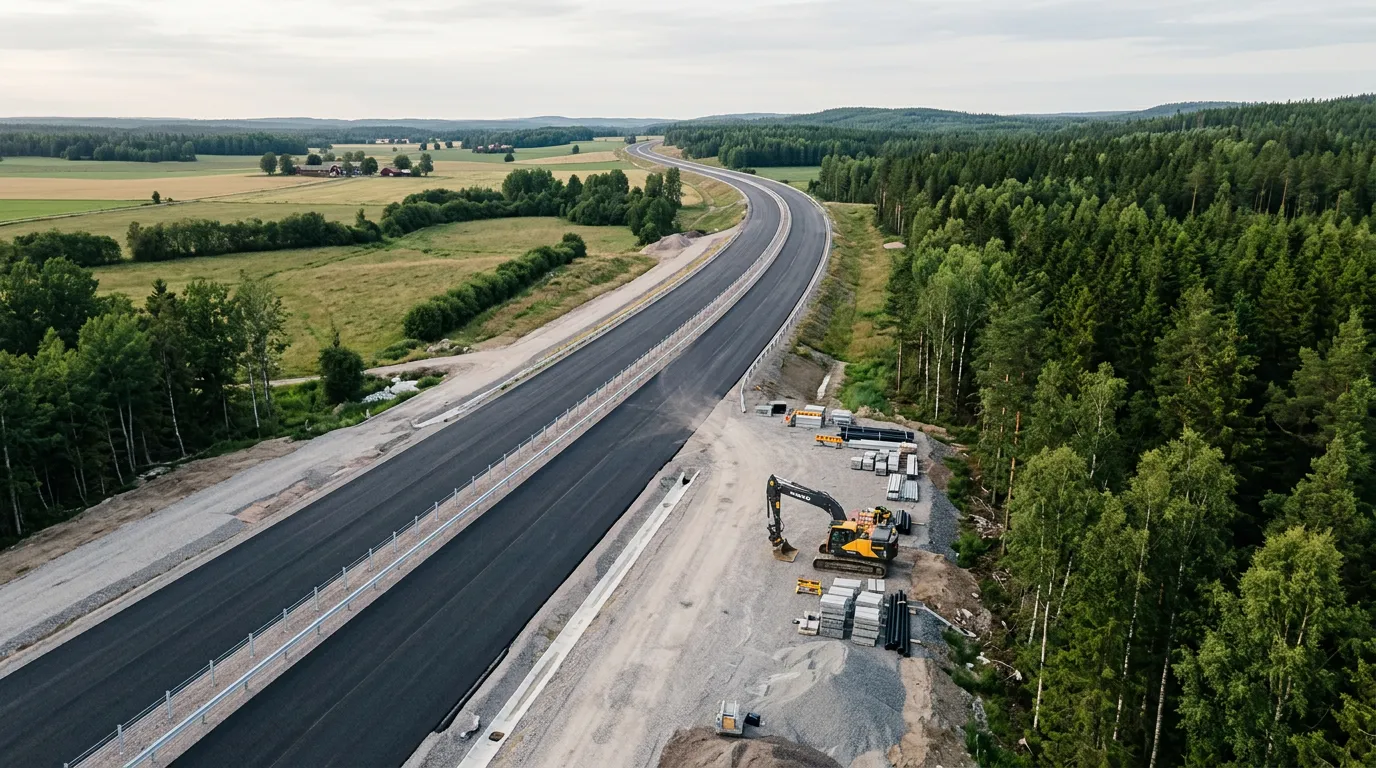
Sweden's stop on the tour is Ostlänken, the new double-track railway between Järna and Linköping. When the feasibility study was published in 2003, the price was around 13 billion kronor. Today's budget is 111 billion in 2024 prices, close to 700 million kronor per kilometre, according to Innovationsföretagen's report Skenande kostnader. Construction has barely begun.
At the end of March 2025, the pattern turned concrete. Trafikverket cancelled the procurements of two contracts at Vagnhärad and Skavsta, budgeted at around 20 billion kronor together, after the updated cost estimate came in roughly 50 percent over that budget. Before new tender documents could go out, the requirements themselves went back for review. The programme director explained:
Sedan upphandlingarna gick ut har vi analyserat projekten djupare och insett att de är mer utmanade än vad vi tidigare antagit. Vår nuvarande kravbild innebär en högre kostnad än vad vi budgeterat för.
The pattern
None of these projects failed at engineering. The tunnels hold and the stations stand. What they share sits earlier in the chain: designs procured before they were mature, then reviewed, disputed and redone at contract prices. The genre's two classics point the same way. Hamburg's Elbphilharmonie went from 77 to 789 million euros; the Sydney Opera House overran its budget by 1,400 percent, the record in Bent Flyvbjerg's compilation of large projects.
| Project | Cost, then → now | Source |
|---|---|---|
| Stuttgart 21 | €4.5bn → €11.45bn | DB financing framework, Dec 2023 |
| HS2 Phase One | £42.9bn → £61.8bn | HS2 Ltd, June 2024 (2019 prices, excl. Euston) |
| Ostlänken | SEK 13bn → 111bn | Skenande kostnader (2025) |
| Elbphilharmonie | €77m → €789m | The Local/dpa (2016) |
| Sydney Opera House | +1,400% | Flyvbjerg (2014), table 2 |
The pattern has a mechanism, and it is neither lying nor laziness. Research on cost overruns calls it lock-in: commitments made on immature material are expensive to unwind, so the immaturity is worked off later, as review rounds, disputes and redesign. That was Wild's conclusion about HS2, and it was Trafikverket's message about Ostlänken: the requirements could only be reviewed after the tenders had come in.
In 2026, Europe takes longer to build a railway than it did in the 1850s. The difference is not in the ground: drill rigs, tunnel boring machines and prefabricated bridge spans have all improved. The difference is the engineering work around the ground. What fills the lost decades happens at every desk a deliverable passes: designing it and setting the requirements, reading them, calculating and pricing, resolving the contradictions before they harden into disputes. All of it by hand, at human speed. That part is not geology, and it no longer has to run at that speed. Producing a mature design and reading a tender to the bottom are the same work, and both can now run at machine speed: not a faster review at the end, but a basis that holds from the first desk to the last.
Sources
Get news and articles in your inbox.
The megaprojects don't fail in the ground but in immature design procured too soon. Yesper works on exactly that: a mature design and a tender package read to the bottom, with the contradictions flagged before they become disputes. Book a demo and we'll show you how.
Book demo